Quick Answer
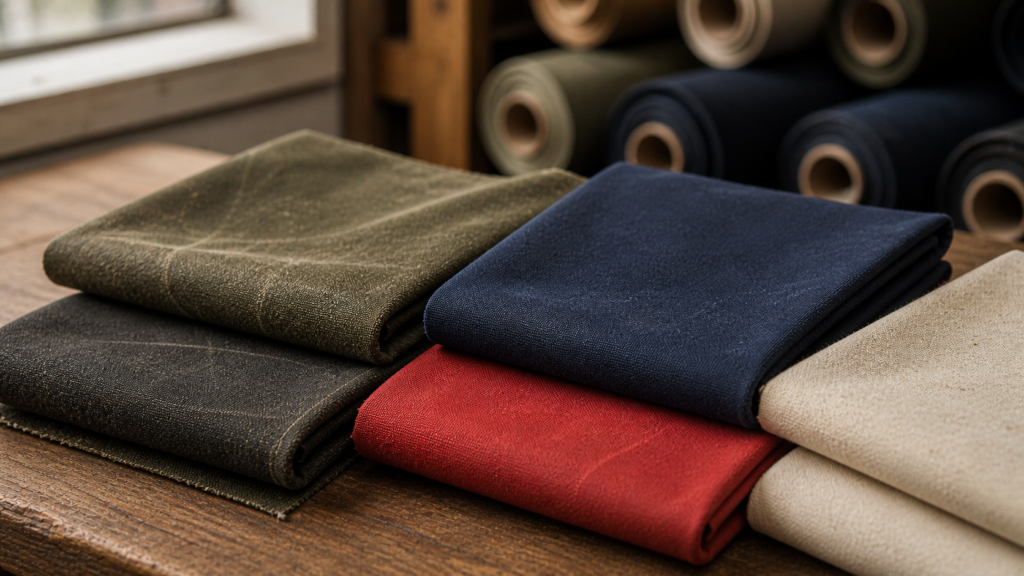
Sulfur-dyed canvas, reactive-dyed canvas and regular canvas may use similar base fabric, but the dyeing and finishing method changes color effect, wash appearance, rubbing fastness and final product style.
Canvas is one of the most common fabrics in bags, workwear, aprons, shoes, tents, covers, outdoor accessories and casual clothing.
When buyers talk about canvas, they often focus on weight, yarn count, weave density and composition.
These are important.
But for many canvas products, the dyeing and finishing method is just as important as the fabric construction.
Two pieces of canvas can have the same weight and similar composition, but after dyeing, they may look and perform very differently.
This is why terms such as sulfur-dyed canvas, reactive-dyed canvas and regular canvas often appear in sourcing conversations.
They are all canvas, but they are not the same canvas.
For buyers, understanding the difference can help avoid wrong expectations, especially when color effect, washing, rubbing fastness and vintage appearance matter.
What Does “Canvas” Mean First?
Canvas usually refers to a strong woven fabric.
It is often made from cotton, cotton-polyester blends, polyester-cotton blends, hemp, linen or other fibers. The fabric can be plain weave, duck canvas, twill canvas or other sturdy woven structures.
Canvas is widely used because it has body, strength and a practical hand feel.
However, canvas is only the base fabric.
After weaving, the fabric can be dyed, printed, washed, coated, waxed, brushed, softened or finished in many different ways.
So when a buyer says “I need canvas,” the supplier still needs to know:
- What fiber composition is required?
- What fabric weight is needed?
- What color effect is expected?
- Should the color look clean, vintage, faded or natural?
- Will the final product be washed?
- What color fastness level is required?
- What hand feel is needed?
The answer to these questions can decide whether sulfur-dyed canvas, reactive-dyed canvas or regular canvas is the better choice.
What Is Sulfur-Dyed Canvas?
Sulfur-dyed canvas is usually cotton or cotton-rich canvas dyed with sulfur dyes.
Sulfur dyes are commonly used for deep, muted and vintage-style colors such as black, navy, olive, khaki, brown, charcoal and military green.
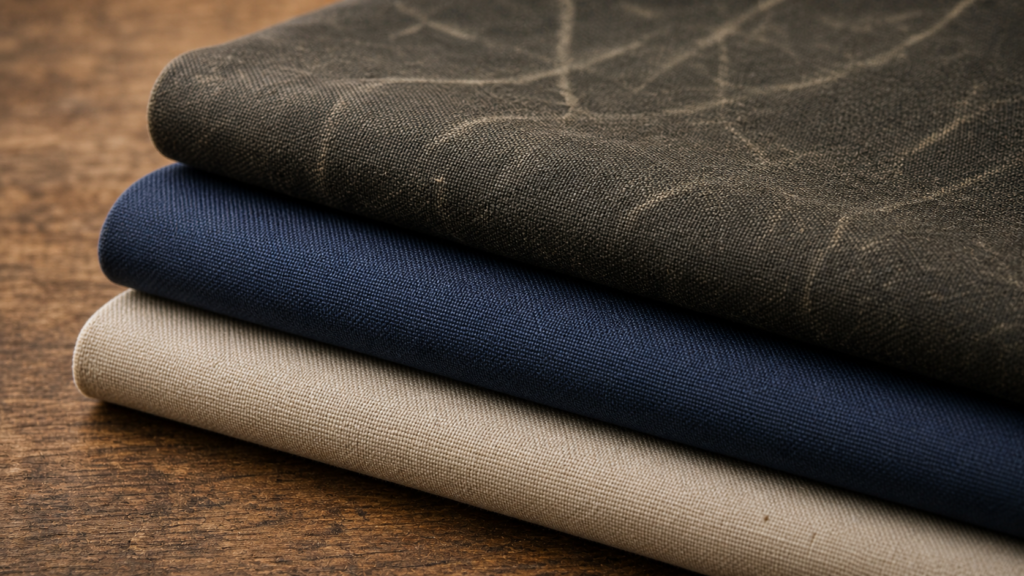
The biggest feature of sulfur-dyed canvas is its natural fading character.
After washing, rubbing or garment processing, the color can become softer and more aged. This makes the fabric suitable for products that need a rugged, worn-in or heritage look.
Sulfur-dyed canvas is often used for:
- Vintage canvas bags
- Workwear jackets
- Casual pants
- Outdoor-style accessories
- Utility aprons
- Tool bags
- Washed canvas products
- Heritage fashion items
For many brands, sulfur-dyed canvas is attractive because the fabric does not look too new or too flat. It can show depth, shade variation and character.
However, this character also needs control.
Sulfur-dyed canvas may have lower rubbing fastness or more color variation than some cleaner dyeing methods, depending on the dyeing process, washing process and final color.
Buyers should not treat color fading as a defect if the product is designed for a washed vintage effect.
But they should confirm how much fading is acceptable before production.
What Is Reactive-Dyed Canvas?
Reactive-dyed canvas is commonly used on cotton and other cellulosic fibers.
Reactive dyes can bond with cellulose fibers under the right dyeing conditions. Because of this, reactive-dyed canvas usually has a cleaner and more stable color appearance than sulfur-dyed canvas.
Reactive dyeing is often selected when buyers want:
- Clearer color
- Better wash performance
- Softer hand feel
- More controlled shade
- Better color consistency
- A cleaner finished appearance
Compared with sulfur-dyed canvas, reactive-dyed canvas usually looks less vintage and less faded.
It is often better for products that need a neat, stable and higher-quality color effect.
Reactive-dyed canvas can be used for:
- Fashion bags
- Aprons
- Garment panels
- Home textile products
- Children’s products
- Accessories that need better wash durability
- Canvas products with cleaner color requirements
Reactive dyeing does not mean every problem disappears.
The result still depends on fabric preparation, dyeing control, washing, finishing and testing. Dark colors still need attention to rubbing fastness and color migration.
But in many cotton canvas applications, reactive dyeing is a strong choice when buyers want better color stability and wash performance.
What Is Regular Canvas?
“Regular canvas” is a common sourcing term, but it is not always a precise technical category.
In different factories or markets, regular canvas may mean:
- Natural canvas
- Greige canvas
- Bleached canvas
- Plain dyed canvas
- Pigment-dyed canvas
- Stock canvas
- Standard canvas without a special washed effect
This is why buyers should be careful with the word “regular.”
Regular canvas may be simple and cost-effective, but the exact meaning needs to be confirmed.
For example, a natural canvas tote bag and a plain dyed canvas apron can both be called regular canvas in casual conversation. But their color, shrinkage, hand feel and fastness requirements are not the same.
Regular canvas is often suitable for:
- Tote bags
- Packaging bags
- Craft products
- Basic aprons
- Covers
- Linings
- Promotional products
- Simple utility items
It can be a good choice when the product does not require a vintage washed look or premium color performance.
But buyers should still confirm the composition, weight, finish and test requirements before bulk production.
Key Differences at a Glance
The main difference between sulfur-dyed canvas, reactive-dyed canvas and regular canvas is not only the name.
It is the final product effect.
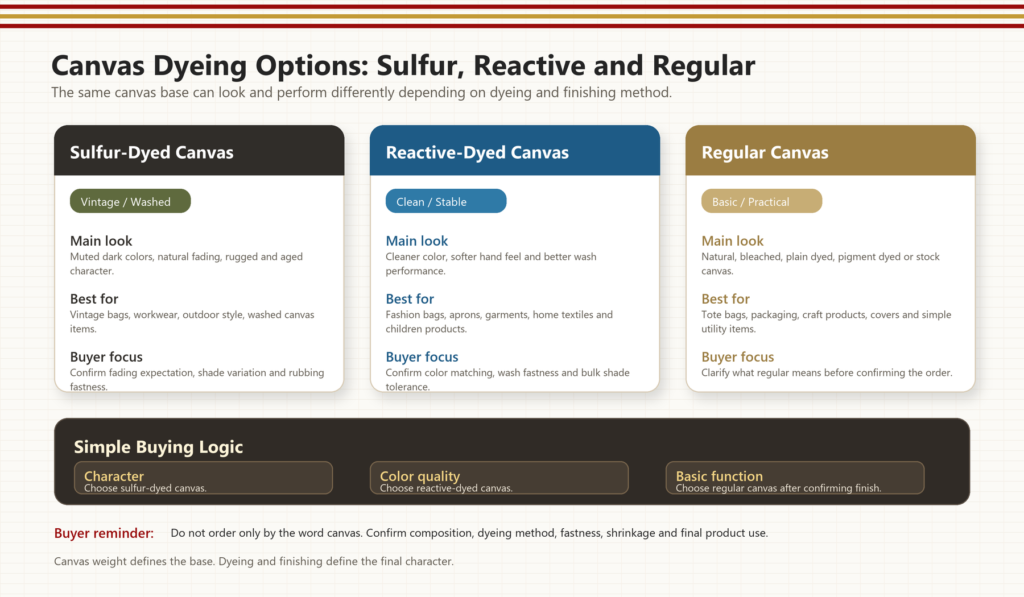
Sulfur-dyed canvas is usually chosen for a vintage, washed and faded look. It gives the product more character, but the buyer must control color variation, fading expectation and rubbing fastness.
Reactive-dyed canvas is usually chosen for cleaner color, better wash performance and a more stable appearance. It is suitable when the buyer wants color quality and durability.
Regular canvas is usually chosen for simple, basic or cost-sensitive products. But the buyer should clarify whether it is natural, bleached, plain dyed, pigment dyed or another standard finish.
In simple terms:
Sulfur-dyed canvas is about character.
Reactive-dyed canvas is about color quality.
Regular canvas is about basic function and cost efficiency.
Which Canvas Is Better for Different Products?
There is no single best canvas for every product.
The right choice depends on the product story, target customer, price level and performance requirement.
Choose sulfur-dyed canvas when the final product needs:
- Washed or vintage appearance
- Natural fading after garment wash
- Rugged outdoor style
- Heritage fashion look
- Dark muted colors
- More character and shade variation
Choose reactive-dyed canvas when the product needs:
- Cleaner and brighter color
- Better washing durability
- More stable bulk shade
- Softer and cleaner hand feel
- Better quality impression
- Less intentional fading
Choose regular canvas when the product needs:
- Simple and practical fabric
- Natural or basic dyed appearance
- Cost efficiency
- Stable stock availability
- Basic tote bag or utility use
- No special color effect
For example, a washed vintage backpack may look better with sulfur-dyed canvas.
A clean fashion tote bag may be better with reactive-dyed canvas.
A simple promotional tote may only need regular natural or plain dyed canvas.
The fabric should serve the product, not just the price.
What Should Buyers Confirm Before Production?
Before ordering canvas fabric, buyers should confirm several practical points.
For all canvas orders, confirm:
- Fiber composition
- Fabric weight
- Yarn count
- Weave structure
- Fabric width
- Hand feel
- Shrinkage
- Color standard
- Testing requirement
- Final product use
For sulfur-dyed canvas, confirm:
- Desired washed effect
- Acceptable shade variation
- Dry and wet rubbing fastness
- Washing fastness
- Color migration risk
- Whether garment washing is needed
- Whether fading is expected or not
For reactive-dyed canvas, confirm:
- Color matching requirement
- Wash fastness standard
- Rubbing fastness requirement
- Fabric preparation quality
- Bulk color tolerance
- Whether the product will be washed after sewing
For regular canvas, confirm:
- What “regular” means
- Natural, bleached, plain dyed or pigment dyed
- Whether softening or finishing is needed
- Whether the fabric needs pre-shrinking
- Whether the product needs testing
These details help reduce misunderstanding before bulk production.
Common Misunderstandings
One common misunderstanding is thinking that sulfur-dyed canvas is poor quality because it fades.
In many cases, fading is exactly the intended effect.
The problem is not fading itself. The problem is uncontrolled fading or fading that does not match the buyer’s expectation.
Another misunderstanding is thinking that reactive-dyed canvas is always better.
Reactive dyeing can offer cleaner color and good wash performance, but it may not create the vintage aged effect that some brands want.
A third misunderstanding is thinking regular canvas is always cheaper and simple.
Regular canvas can be cost-effective, but the buyer still needs to define composition, finish and performance requirements clearly.
The word “canvas” alone is not enough for accurate sourcing.
Final Thought
Canvas is not only defined by weight and weave.
The dyeing and finishing method can completely change how the fabric looks, feels and performs.
Sulfur-dyed canvas gives a vintage, washed and rugged character.
Reactive-dyed canvas gives cleaner color, better wash performance and a more stable appearance.
Regular canvas gives a practical base for simple and cost-sensitive products, but the exact finish still needs to be confirmed.
For buyers, the better question is not only:
How many ounces is this canvas?
The better question is:
What kind of canvas is right for this product?
Need help choosing the right canvas fabric for your product?
FAQ
What is sulfur-dyed canvas best for?
Sulfur-dyed canvas is often used when buyers want vintage, washed, faded or garment-dyed style color effects.
What is reactive-dyed canvas best for?
Reactive-dyed canvas is often suitable when buyers want cleaner color, better wash fastness and a more stable color appearance.
What should buyers confirm before ordering canvas?
Buyers should confirm composition, weight, width, dyeing method, shrinkage, rubbing fastness, washing effect and final product use.
Xingshun Textile supplies and develops canvas fabrics including cotton canvas, organic cotton canvas, hemp canvas, T/C canvas, dyed canvas, printed canvas, waxed canvas and coated canvas for bags, workwear and outdoor products.
About Xingshun Textile
Xingshun Textile is a fabric supplier and manufacturer focusing on woven and functional fabrics, including organic cotton fabric, organic linen fabric, hemp fabric, cotton fabric, twill fabric, canvas, yarn-dyed fabric, denim, corduroy, T/C fabric, nylon fabric and polyester fabric.
We support custom weaving, dyeing, printing, coating, finishing and fabric development based on buyers’ composition, weight, width, hand feel, color standard and end-use requirements.
Send Xingshun Textile your target composition, weight, width, color standard, quantity and end-use requirements to discuss sampling or bulk production.