Quick Answer
Manufacturers add a polyurethane layer to fabric to improve water and wind resistance. The coating can also add structure and support products such as bags, rainwear, covers and outdoor gear.
Yarn, fiber and weave do not decide fabric performance on their own.
However, the finishing process often changes what the fabric can do.
PU coating is a common functional finish. It can improve water resistance, stability and structure. As a result, manufacturers use it for outdoor clothing, bags, workwear, tents, shoes and technical textiles.
Even so, PU coating is not a perfect solution. It improves some properties but also changes hand feel, breathability, weight, drape and durability.
Therefore, buyers need to understand the coating before they order. This helps them look beyond appearance and check real test data.
What Is PU Coating?
PU coating means polyurethane coating.
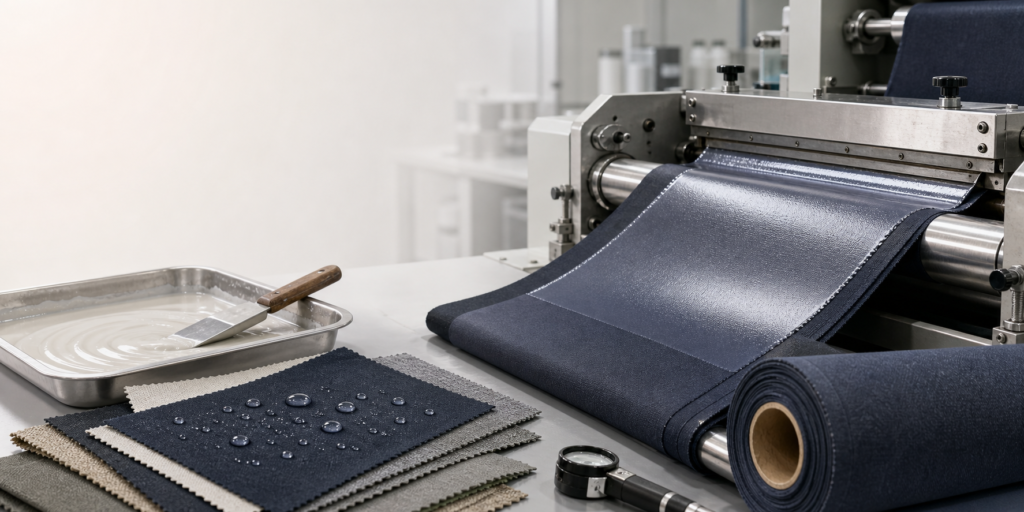
During finishing, a mill applies polyurethane to the fabric surface. The mill then cures the coating to form a thin film. This film changes the fabric’s performance.
The process can use polyester, nylon, cotton, T/C, Oxford, canvas, twill or knitted fabric. Depending on the product, the mill may coat one or both sides.
Most buyers use the process to improve water and wind resistance. They may also need more stability, wear resistance or structure.
Simply put, PU adds a working layer to the original fabric.
Is PU Coating the Same as Waterproof Finishing?
Not exactly.
PU coating can improve water resistance. It may also help fabric meet a waterproof target when the structure, coating weight and test result support that claim.
However, the words “PU coated” do not automatically mean “fully waterproof garment.”
Several factors explain the difference.
First, the coating needs enough thickness and continuity to resist water pressure. A light coating may resist splashes but fail a high hydrostatic-pressure target.
Second, fabric construction matters. Dense woven cloth usually performs differently from a loose weave with the same coating.
Third, garment construction affects the result. Water can enter through seams, stitch holes and zippers. Therefore, a waterproof product may also need seam sealing.
For this reason, buyers should not ask only, “Is it PU coated?” Instead, they should ask:
What water resistance level does this coated fabric need to meet?
How Does PU Coating Work?
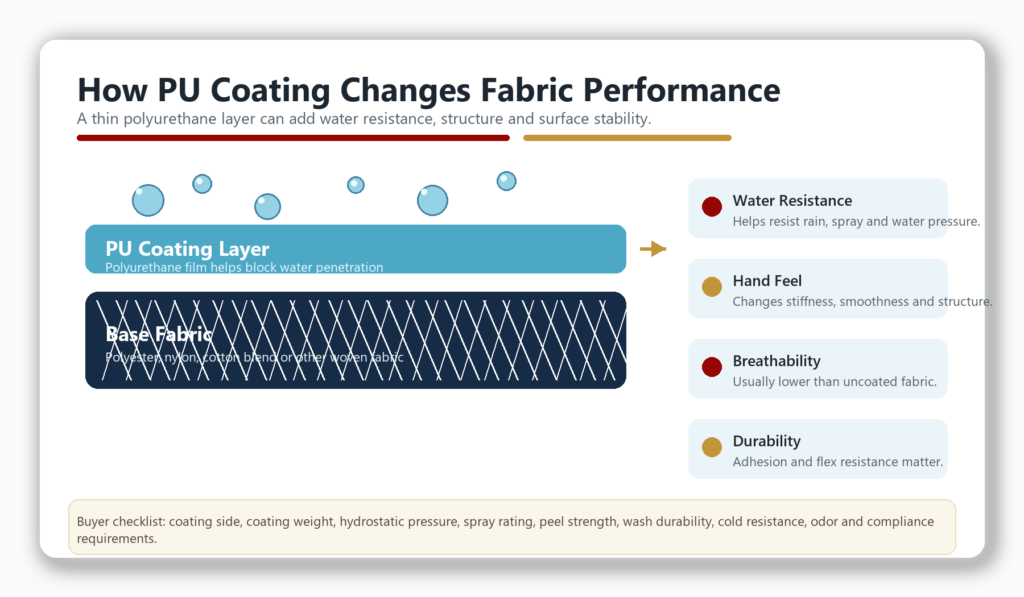
The process adds a polymer layer to the fabric surface.
This layer reduces open spaces between yarns. It also creates a barrier that slows water penetration.
Depending on the formula, the finish may look clear, milky, colored, matte or glossy. It may also feel soft, stiff, light or heavy. Some formulas allow moisture vapor to pass, while others do not.
In practice, the final result depends on several production factors:
- Base fabric construction
- PU formula
- Applied coating weight
- Material viscosity
- Coated side
- Knife gap or coating thickness
- Drying and curing temperature
- Washing and after-treatment
- Testing standard and target performance
As a result, two fabrics called “PU coated” may feel and perform very differently.
Why Do Fabrics Need PU Coating?
Manufacturers use PU coating when the base fabric cannot provide enough function on its own.
For example, woven polyester may offer strength and stable color but limited water resistance. A PU layer can make the same fabric more suitable for bags, covers, rainwear and outdoor accessories.
In addition, the coating can give fabric more body. Extra structure helps bags, luggage, caps and jackets keep their shape.
The coating can also reduce fraying or stabilize the fabric. Moreover, it can prepare the material for lamination, printing or embossing.
Common Uses of PU-Coated Fabric
As a result, brands use PU-coated fabrics across many product categories.
Common applications include:
- Rain jackets and ponchos
- Outdoor jackets
- Bags and backpacks
- Luggage fabric
- Tents and camping products
- Covers and protective sheets
- Workwear and uniforms
- Shoe materials
- Aprons and protective garments
- Upholstery and industrial textile products
- Oxford fabric, polyester fabric, nylon fabric and canvas products
The right coating depends on the final use. For example, a rain jacket and a heavy backpack need different coating weights, hand feels and durability targets.
PU Coating vs DWR Finishing
Meanwhile, buyers often confuse PU coating with DWR finishing.
DWR means durable water repellent. This surface treatment helps water bead and roll off. Therefore, it mainly reduces surface wetting.
In contrast, PU forms a layer that helps block water from passing through the fabric.
Many products combine both finishes. The face may use DWR, while the back uses PU to improve resistance under pressure.
Therefore, buyers should define the need clearly. They may need surface repellency, resistance under pressure or both.
What Performance Can PU Coating Improve?
Depending on the process, PU can improve several properties.
Water Resistance
Most buyers choose PU coating to improve resistance to water penetration.
Hydrostatic pressure testing measures this property. A higher result means the fabric resisted more water pressure under the test conditions.
However, each product needs a different target. A fashion jacket, backpack, tent floor and protective fabric will not share the same requirement.
Wind Resistance
Because the coating reduces airflow, PU-coated fabric can also resist wind more effectively.
For this reason, the finish can suit outerwear, covers, tents and protective products.
Structure and Hand Feel
The coating can make fabric feel fuller, stiffer, smoother or more structured.
This added body helps bags and luggage keep their shape. In contrast, too much stiffness may make clothing uncomfortable.
Abrasion and Surface Protection
A suitable coating can protect the surface and improve durability. This works especially well when the coated side forms an inner backing.
However, durability depends on adhesion and formulation. A poor coating may peel, crack or become sticky after washing or flexing.
What Are the Trade-Offs?
PU coating improves function. Still, every gain brings a trade-off.
Breathability May Decrease
Uncoated fabric usually allows more air and moisture vapor to pass. After a mill adds PU, breathability often falls.
Some PU formulas allow moisture vapor to pass. Even so, buyers should not assume every PU-coated fabric is breathable.
If the product needs comfort and water resistance, buyers should test moisture-vapor transmission.
Hand Feel May Become Stiffer
A heavier coating may improve the barrier. However, it can also make the fabric stiff and less flexible.
For garments, this can affect comfort, drape and movement. For bags, stiffness may be useful.
Buyers Must Check Coating Durability
The coating layer must stay stable during use.
Buyers should consider washing, folding, rubbing, cold, humidity and storage. A new coating may look good but fail later if it has poor adhesion or aging resistance.
Odor and Compliance Matter
Depending on the market, buyers may set limits for odor, solvent residue and restricted substances. They may also require REACH, RoHS or rules covering PFAS, phthalates and heavy metals.
For this reason, compliance checks matter for children’s products, bags, clothing and export orders.
How Do Buyers Test PU-Coated Fabric?
Test plans depend on the final use. Even so, buyers often check the same core points.
Hydrostatic Pressure
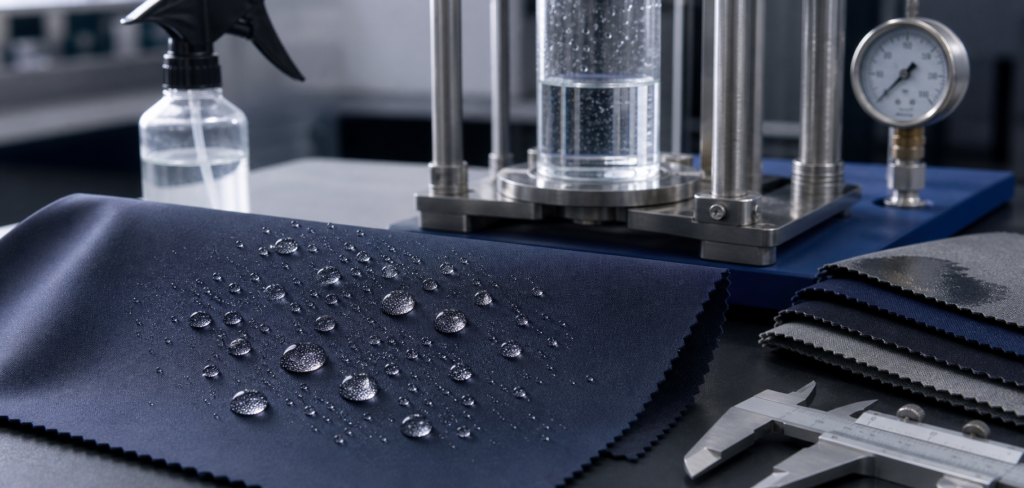
This test measures resistance to water penetration under pressure.
For example, buyers often reference AATCC TM127 or ISO 811 for hydrostatic-pressure testing.
These results provide measurable data instead of a simple water-beading demonstration.
Spray Rating
Spray testing checks how well the surface resists wetting.
Buyers often reference AATCC TM22 or ISO 4920. These methods show how water behaves on the fabric surface.
However, surface repellency differs from resistance under pressure. Fabric may bead water yet still leak if the coating or construction is too weak.
Peel Strength and Adhesion
Poor bonding can cause the coating to peel, bubble, crack or separate.
Therefore, buyers should check adhesion for bags, outdoor textiles and products that face frequent folding or rubbing.
Washing and Aging Resistance
Depending on the end use, buyers may test the coating after washing, drying, heat, humidity, cold flexing or repeated folding.
These checks matter because heat, moisture and poor storage can damage PU over time.
What Should Buyers Confirm Before Ordering?
Before production, buyers should confirm these practical points:
- Base fabric composition
- Fabric weight and construction
- Coated side
- Clear, white, colored, matte or glossy appearance
- Coating weight
- Required water resistance
- Test method and pass level
- Need for surface water repellency
- Breathable or non-breathable construction
- Soft, medium, stiff or structured hand feel
- Required peel strength or adhesion
- Wash resistance
- Cold and flex resistance
- Odor limits
- Market compliance standards
- Need for seam sealing
Together, these questions help the buyer, fabric supplier and garment factory avoid misunderstandings.
Is a Heavier Coating Always Better?
No. In fact, more coating does not always mean better fabric.
A heavier coating may improve water resistance. However, it can also add weight, reduce breathability and increase stiffness.
A strong coating may suit a bag or cover. By comparison, too much coating can make a light jacket uncomfortable.
Therefore, the best PU coating is not always the thickest. It is the one that matches the product requirement.
Final Thought
PU coating is a useful textile finishing process.
It can improve water resistance and structure. However, it also changes breathability, hand feel, flexibility and durability.
Buyers should look beyond the words “PU coated.” Instead, they should define the required result, test method and final use.
As a result, the right PU finish can turn ordinary fabric into a useful functional material.
Reference Notes
The article uses general textile finishing knowledge. In addition, the following official standards support the test references:
- AATCC TM127: Water Resistance: Hydrostatic Pressure (https://members.aatcc.org/store/tm127/535/)
- AATCC TM22: Water Repellency: Spray Test (https://members.aatcc.org/store/tm22/487/)
- ISO 811:2018: Resistance to water penetration – Hydrostatic pressure test (https://www.iso.org/standard/65149.html)
- ISO 4920:2012: Resistance to surface wetting – Spray test (https://www.iso.org/standard/50706.html)
FAQ
Does PU coating make fabric waterproof?
PU coating can improve water resistance. However, full waterproof performance also depends on coating quality, test results, fabric structure and garment construction.
What tests are important for PU coated fabric?
Common checks include hydrostatic pressure, spray rating, coating adhesion, peeling strength, washing resistance and aging performance.
What should buyers confirm before ordering PU coated fabric?
Buyers should confirm base fabric, coating side, coating weight, water resistance target, hand feel, breathability, adhesion and compliance requirements.
For PU coated polyester, nylon, Oxford fabric, canvas, twill and other functional fabrics, Xingshun Textile can support coating development based on water resistance, hand feel, coating side and end-use requirements.
About Xingshun Textile
Xingshun Textile is a fabric supplier and manufacturer focusing on woven and functional fabrics, including organic cotton fabric, organic linen fabric, hemp fabric, cotton fabric, twill fabric, canvas, yarn-dyed fabric, denim, corduroy, T/C fabric, nylon fabric and polyester fabric.
We support custom weaving, dyeing, printing, coating, finishing and fabric development based on buyers’ composition, weight, width, hand feel, color standard and end-use requirements.
Send Xingshun Textile your target composition, weight, width, color standard, quantity and end-use requirements to discuss sampling or bulk production.