Quick Answer
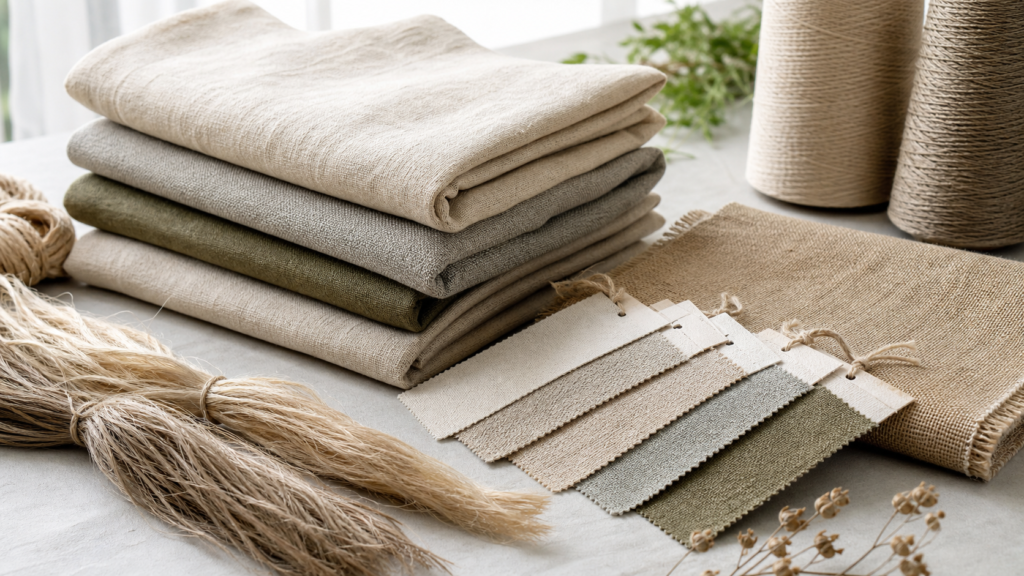
Linen, hemp and ramie all belong to the bast fiber family. These fibers come from plant stems, so they often show a natural texture and a dry hand feel.
However, they are not the same fabric.
Linen comes from flax. Hemp comes from the hemp plant. Ramie comes from ramie fiber. Therefore, each fabric can feel, shrink, dye and perform differently.
For buyers, the key is simple. Do not choose only by fabric name. Instead, confirm the fiber content, fabric weight, weave, hand feel, shrinkage and final product use before sampling or bulk production.
1. What Does Bast Fiber Fabric Mean?
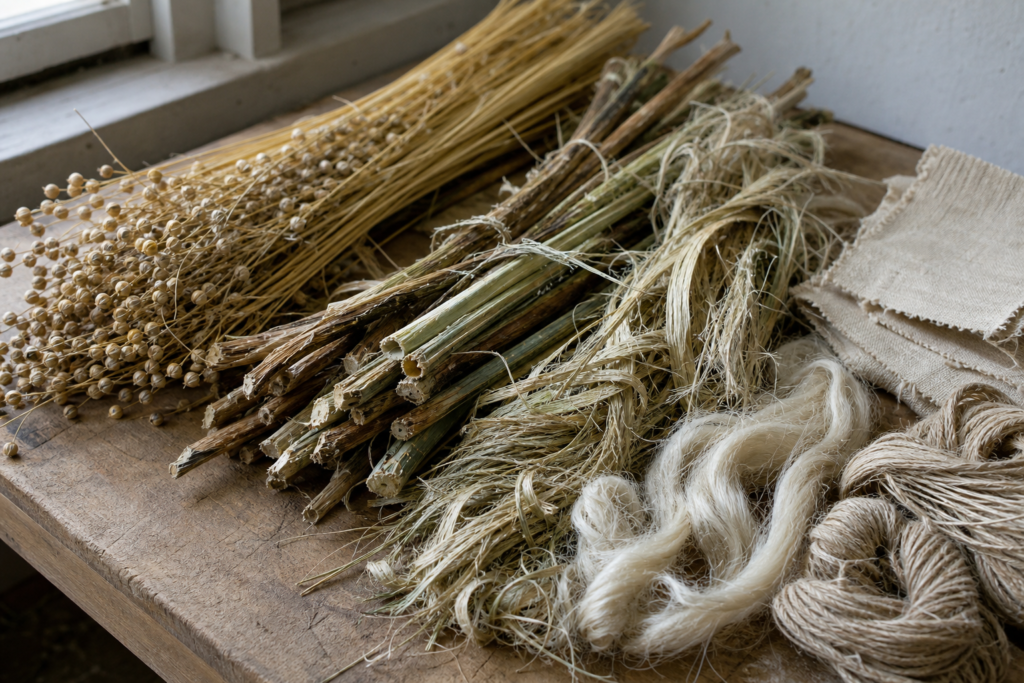
Bast fibers come from plant stems.
This makes them different from cotton. Cotton comes from seed hair, while bast fibers come from the stem structure of the plant.
Common bast fibers include:
- Flax, which makes linen fabric
- Hemp, which makes hemp fabric
- Ramie, which appears in ramie fabric and blends
- Jute, which often works for sacks and coarse packaging textiles
As a result, bast fiber fabrics often feel firmer, drier and more textured than basic cotton fabric.
In addition, they can look more natural. Many brands choose them because the fabric already carries a strong visual identity.
Still, buyers should check the details. Spinning, weaving, dyeing, washing and finishing can all change the final fabric.
2. Linen, Hemp and Ramie: What Is the Difference?
Linen usually starts with flax fiber.
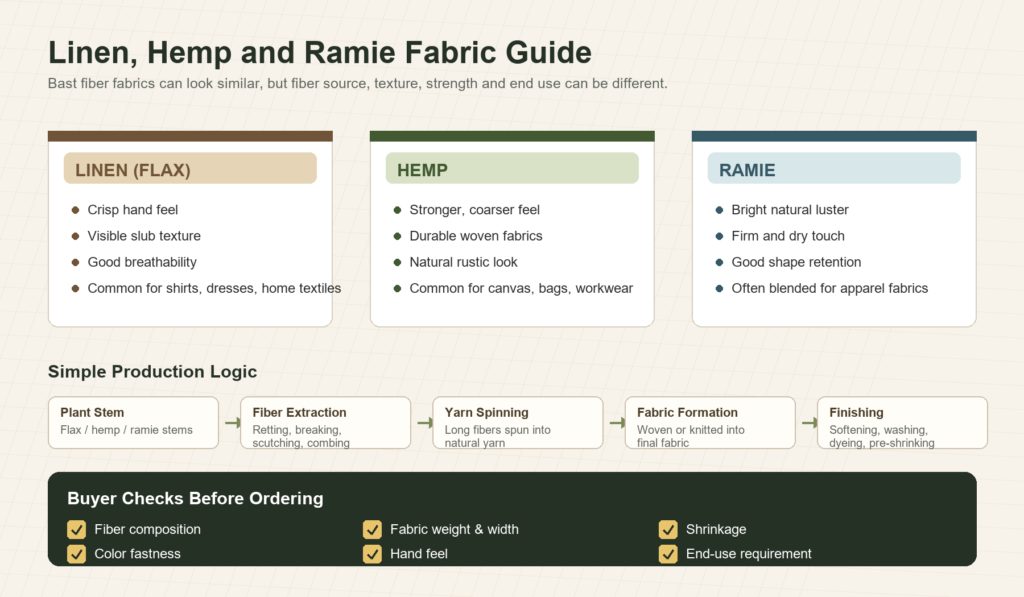
It often feels crisp, cool and breathable. It may also show natural slubs. Because of this, buyers often use linen for shirts, dresses, pants, bedding, curtains and summer garments.
Hemp starts with hemp fiber.
In many cases, hemp feels stronger and more rugged than linen. It can also feel coarser if the yarn or finishing is rough. Therefore, buyers often choose hemp for canvas, bags, workwear, casual garments, upholstery and natural fiber collections.
Ramie starts with ramie fiber.
It can show a bright natural luster and a firm, dry touch. Many mills blend ramie with cotton, linen or viscose to improve structure, cost or hand feel.
These fabrics can look similar at first. However, buyers should not rely only on appearance. Always confirm the actual composition.
3. Why Do Linen and Hemp Fabrics Have Texture?
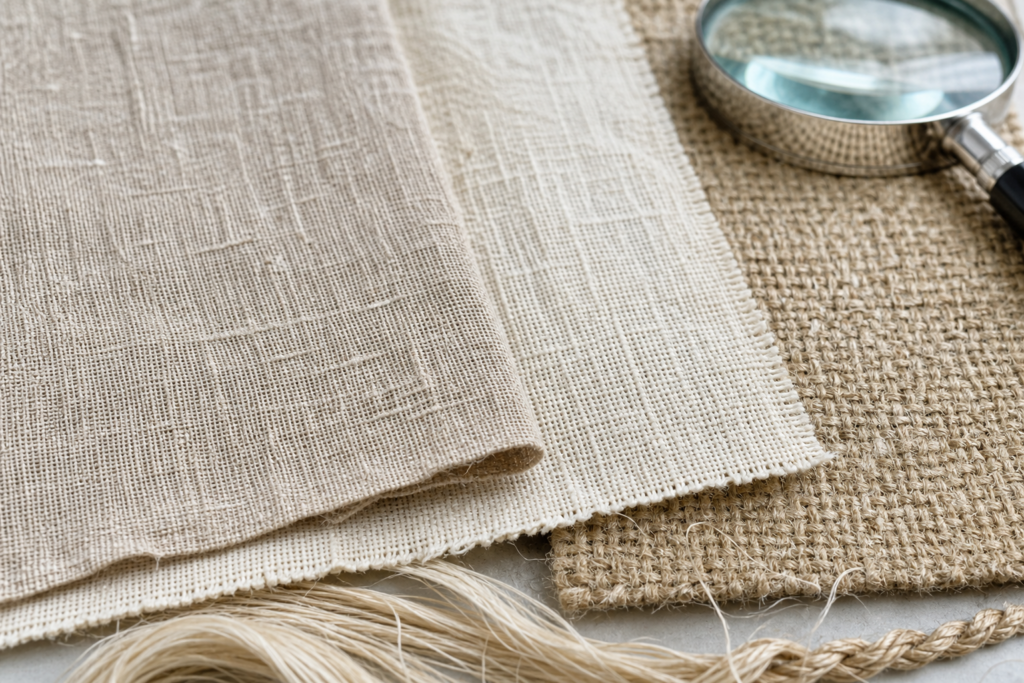
Linen and hemp fabrics often show slubs, uneven yarns and small natural marks.
This texture gives the fabric a relaxed and organic look. For many brands, that is part of the appeal.
However, texture does not mean poor quality.
The real question is control. Does the texture match the product? Does it look intentional? Does the buyer accept it for bulk production?
For example, a premium linen shirt may need a clean and refined slub effect. In contrast, a hemp canvas tote bag can accept a stronger rustic texture.
Therefore, the product use should guide the fabric choice.
4. Main Advantages of Linen and Hemp Fabric
Linen, hemp and ramie fabrics offer several useful advantages.
Breathability
They often feel cool and breathable. Therefore, they work well for warm-weather garments and home textiles.
Natural Appearance
They show texture, slub and a natural surface. As a result, the fabric can support a relaxed or eco-conscious product story.
Durability
Hemp and ramie can offer strong fiber performance. Linen can also perform well when the mill controls yarn, weaving and finishing properly.
Product Identity
Compared with basic cotton or polyester, linen and hemp fabrics often look more distinctive. The fabric itself becomes part of the product design.
Blend Flexibility
Mills often blend linen, hemp or ramie with cotton, viscose, Tencel, polyester or spandex. This can improve softness, drape, wrinkle recovery, cost or production stability.
5. What Should Buyers Be Careful About?
Natural fiber fabrics also need careful checking.
First, linen and hemp can wrinkle easily. For some products, wrinkles create a natural look. However, other products may need blending or special finishing.
Second, shrinkage matters. Bast fiber fabrics can shrink after washing. Therefore, buyers should confirm shrinkage before cutting or bulk production.
Third, hand feel can vary a lot. Some hemp or ramie fabrics may feel firm or dry. However, washing, softening, enzyme treatment or blending can make the fabric more comfortable.
Finally, color control needs attention. Natural fibers may absorb dye differently. As a result, buyers should check lab dips, sample yardage, bulk shade and color fastness.
6. Common Uses of Linen and Hemp Fabric
Buyers use linen and hemp fabrics in many product categories.
For garments, common uses include:
- Shirts
- Dresses
- Pants
- Jackets
- Summer suits
- Casual tops
- Resort wear
- Aprons
- Workwear
For bags and accessories, common uses include:
- Tote bags
- Canvas bags
- Backpacks
- Hats
- Shoes
- Outdoor-style accessories
For home textiles, common uses include:
- Curtains
- Tablecloths
- Napkins
- Cushion covers
- Bedding
- Upholstery-style fabrics
However, one fiber can serve many different products. A lightweight linen shirt fabric and a heavy hemp canvas have very different requirements. Therefore, buyers should match fabric construction to the final use.
7. What Should Buyers Confirm Before Ordering?
Before ordering linen, hemp or ramie fabric, buyers should confirm:
- Actual fiber composition
- Pure fiber or blended content
- Fabric weight and width
- Yarn count and construction
- Weave type, such as plain weave, twill, canvas or dobby
- Hand feel requirement
- Shrinkage after washing
- Color fastness
- Rubbing fastness
- Finishing method
- Pre-shrinking requirement
- Softening, washing or enzyme finishing
- MOQ and lead time
- Final product use
In short, do not ask only:
Do you have linen fabric?
Instead, ask:
Which bast fiber fabric best matches this product, price target and performance requirement?
FAQ
Is linen the same as hemp fabric?
No. Linen comes from flax fiber, while hemp fabric comes from hemp fiber. They may look similar, but their texture, strength, hand feel and end use can differ.
Why does linen fabric wrinkle easily?
Linen has a crisp fiber structure and lower elastic recovery than some other fibers. Therefore, wrinkles appear more easily. Many buyers see this as part of linen’s natural character.
Is hemp fabric always rough?
No. Hemp can feel coarse when the yarn or finishing is rough. However, better yarn quality, blending, washing and soft finishing can make hemp fabric softer.
What is the best use for linen and hemp fabric?
Linen often works well for breathable apparel and home textiles. Hemp often works well for durable garments, canvas, bags, workwear and natural-style products. Still, the best choice depends on construction and final use.
Final Thought
Linen, hemp and ramie fabrics are more than natural-looking materials.
They have their own fiber behavior, texture, advantages and production risks.
Therefore, buyers should look beyond the fabric name.
Check fiber content, fabric weight, weave, hand feel, shrinkage, color fastness and final product use before production.
That is how a natural fabric choice becomes a reliable sourcing decision.
About Xingshun Textile
Xingshun Textile is a fabric supplier and manufacturer focusing on woven and functional fabrics, including organic cotton fabric, organic linen fabric, hemp fabric, cotton fabric, twill fabric, canvas, yarn-dyed fabric, denim, corduroy, T/C fabric, nylon fabric and polyester fabric.
We support custom weaving, dyeing, printing, coating, finishing and fabric development based on buyers’ composition, weight, width, hand feel, color standard and end-use requirements.
For linen fabric, hemp fabric, organic cotton fabric or custom woven fabric sourcing, contact Xingshun Textile if needed.