
Quick Answer
Reactive printing uses reactive dyes that bond with suitable fibers such as cotton, viscose and linen. It is often chosen when buyers need soft hand feel, clear print color and good washing performance.
Fabric printing is not only about putting color on the surface.
In many textile products, the real question is how the color interacts with the fiber.
This is why reactive printing is such an important process in cotton and natural fiber fabrics. It is commonly used for printed cotton poplin, voile, lawn, twill, canvas, jersey, bedding fabrics, dresses, shirts, baby textiles, scarves and home textile products.
At first glance, a printed fabric may simply look bright or decorative. But behind the print, there is a finishing decision that affects hand feel, wash fastness, color depth, production cost and final product quality.
Reactive printing is one of the most common choices when buyers want a soft fabric with clear color and better durability after washing.
However, it is also easy to misunderstand.
Reactive printing is not the same as pigment printing. It is not suitable for every fiber. It also requires proper pre-treatment, steaming, washing and quality control.
For buyers, designers and sourcing teams, understanding the basics of reactive printing can make fabric selection much easier.
What Is Reactive Printing?
Reactive printing is a fabric printing method that uses reactive dyes.
These dyes are designed to react chemically with suitable fibers, especially cellulosic fibers such as cotton, viscose, rayon, modal, bamboo viscose and linen.
In simple terms, reactive dyes do not just sit on top of the fabric. Under the right conditions, they bond with the fiber. This is one of the reasons reactive printed fabric can have a soft hand feel and good washing performance.
For cotton fabric, reactive printing is often selected when the buyer wants:
- Bright and clear color
- A soft fabric touch
- Good wash fastness
- Better breathability compared with heavy surface coatings
- A print effect that feels more integrated with the fabric
This makes reactive printing popular for garments and home textiles that touch the skin or need repeated washing.
How Does Reactive Printing Work?
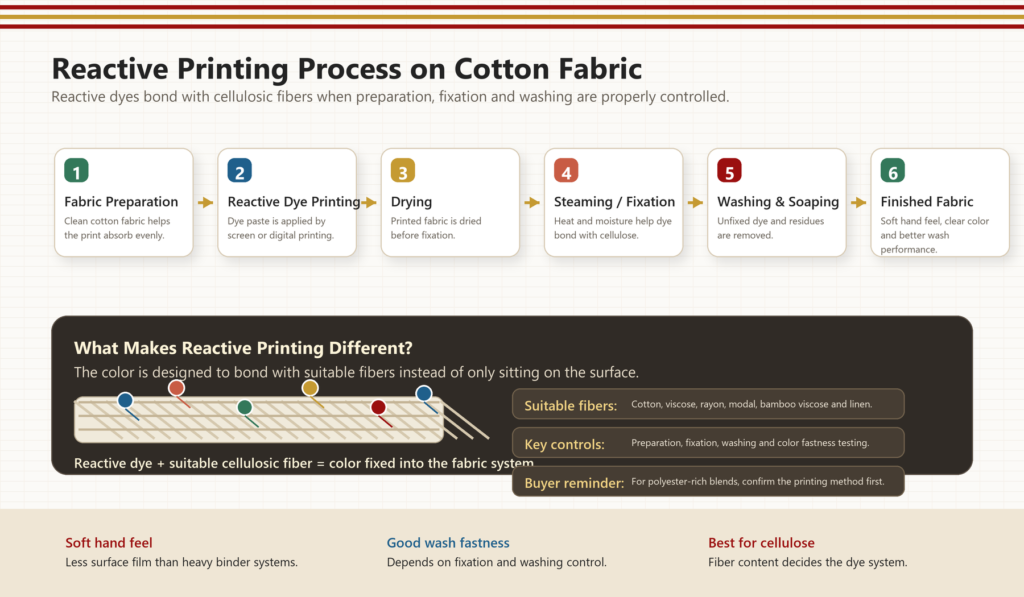
The exact process can vary by factory, fabric type, dye system and equipment, but the basic logic is similar.
First, the fabric usually needs good preparation. Cotton fabric may go through processes such as desizing, scouring, bleaching or mercerizing, depending on the quality level required. If the fabric surface is not clean and even, the print result can be affected.
Then the reactive dye is applied to the fabric through a printing method. This may be rotary screen printing, flat screen printing or digital reactive printing.
After printing, the fabric is dried and then fixed. In many reactive printing processes, steaming is used to help the dye react with the fiber under controlled moisture, temperature and alkaline conditions.
After fixation, the fabric must be washed and soaped properly. This step removes unfixed dye, excess chemicals and residues from the fabric.
Finally, the fabric may go through finishing, inspection and testing.
This is why reactive printing should not be judged only by the printed pattern. The hidden process after printing is just as important as the artwork itself.
Why Is Reactive Printing Popular for Cotton?
Cotton is one of the best-known fibers for reactive printing because it contains cellulose.
Reactive dyes can form a strong connection with cellulose fibers when the process is controlled correctly. This helps the color become part of the fabric rather than only a surface layer.
For finished products, this can bring several advantages.
The fabric usually feels softer than pigment printed fabric with a heavy binder. The print can remain breathable and comfortable. Colors can be bright and attractive. Wash fastness can also be strong when the dyeing and washing process is properly managed.
This is especially important for:
- Shirts and blouses
- Dresses
- Children’s clothing
- Pajamas
- Scarves
- Cotton bedding
- Printed voile, lawn and poplin
- Home textile fabrics
- Light canvas and cotton accessories
When the final product needs comfort and repeated washing, reactive printing is often worth considering.
Reactive Printing vs Pigment Printing
Reactive printing and pigment printing are two common fabric printing methods, but they work differently.
Pigment printing uses pigment colorants with a binder. The color is attached to the fabric surface by the binder film. This method can be used on many fiber types, including cotton, polyester and blended fabrics. It is flexible and widely used.
Reactive printing uses reactive dyes that bond with suitable fibers, especially cellulosic fibers. Instead of relying mainly on a surface binder, the dye becomes more integrated with the fiber.
In practical terms, pigment printing is often easier to apply across different fabrics and can be cost-effective for many products. However, if the binder is heavy, the fabric may feel stiffer or slightly coated.
Reactive printing usually gives a softer hand feel and better comfort on cotton and viscose fabrics. It can also offer good wash fastness when properly processed.
But reactive printing is more process-sensitive. It needs suitable fiber content, proper pre-treatment, fixation and washing. It may also require more water and processing control than simple pigment printing.
So the better question is not:
Which printing method is always better?
The better question is:
Which printing method fits the fabric, product use, price level and quality requirement?
Is Reactive Printing Suitable for Every Fabric?
No.
Reactive printing is mainly used for cellulosic fibers such as cotton, viscose, rayon, modal, bamboo viscose and linen.
It is not the normal choice for polyester. Polyester usually requires disperse dyes. Nylon often uses acid dyes. Different fiber families need different dye systems.
This is very important for blended fabrics.
For example, a cotton-polyester blend may not react the same way as 100% cotton. The cotton part may take reactive dye, but the polyester part may not. This can affect color depth, shade, print clarity and final appearance.
Before choosing reactive printing, buyers should confirm the exact fabric composition.
If the fabric is 100% cotton, reactive printing may be a strong option. If the fabric is CVC, T/C or polyester-rich, the printing method needs more careful discussion with the supplier.
What Products Commonly Use Reactive Printed Fabric?
Reactive printed fabric is common in products where softness, color quality and washing performance matter.
Typical applications include:
- Cotton shirts
- Summer dresses
- Baby and children’s clothing
- Sleepwear
- Cotton scarves
- Bedsheets and duvet covers
- Pillowcases
- Home textile fabrics
- Printed cotton voile
- Printed cotton poplin
- Printed rayon or viscose fabric
- Light canvas bags and accessories
The final use matters because different products have different priorities.
A baby garment may require excellent softness and safety compliance. A bedsheet may require strong washing durability. A fashion dress may focus more on color brightness, drape and print clarity.
The printing method should support the final product requirement.
What Are the Advantages of Reactive Printing?
Reactive printing has several important advantages.
First, the hand feel can be very soft. Because the dye bonds with the fiber, the fabric does not always need a heavy surface binder to hold the color.
Second, the print can have good wash fastness when the process is well controlled. This is important for clothing and home textiles that need regular washing.
Third, reactive printing can achieve bright colors and detailed patterns on cotton and viscose fabrics.
Fourth, the fabric can remain more breathable and natural compared with some heavy surface print systems.
Fifth, reactive printing often gives a higher-quality impression on natural fiber fabrics, especially when the buyer wants comfort and a premium touch.
These advantages explain why reactive printing remains widely used in cotton and viscose textile production.
What Are the Limitations?
Reactive printing also has limitations.
The process is more demanding than it may appear.
Fabric preparation must be consistent. If the fabric has uneven absorbency, oil, sizing residue or poor pre-treatment, the print may look uneven.
Fixation must be controlled. If steaming, moisture, temperature or time is not suitable, dye reaction may be incomplete.
Washing must be thorough. If unfixed dye is not removed properly, the fabric may have poor rubbing fastness, staining or washing issues.
Reactive printing may also use more water and processing steps than some other print methods. This can affect cost, lead time and environmental management.
Color matching can also require careful sampling, especially for repeat orders or dark shades.
Another point is shrinkage. Cotton and viscose fabrics can change during wet processing, so shrinkage control should be discussed before bulk production.
What Should Buyers Confirm Before Ordering?
Before ordering reactive printed fabric, buyers should confirm several points:
- What is the exact fiber composition?
- Is the fabric suitable for reactive printing?
- Has the fabric been properly prepared before printing?
- Is the print method rotary screen, flat screen or digital reactive printing?
- What are the color fastness requirements?
- What washing standard should the final product meet?
- Is the hand feel soft enough for the target product?
- Are dark colors or large solid areas involved?
- Is shrinkage control required?
- Are there safety or compliance requirements for the destination market?
- Is color matching needed against a Pantone, lab dip or previous bulk lot?
- What is the expected production lead time?
- What testing should be done before shipment?
These questions help avoid misunderstandings between buyer, fabric supplier and garment factory.
For example, a buyer may request a very soft cotton fabric with a bright print and strong wash fastness. Reactive printing may be a good direction. But if the fabric is a polyester-rich blend, the printing plan may need to change.
The printing method must match the fabric, not only the design artwork.
Final Thought
Reactive printing is one of the most important printing methods for cotton and other cellulosic fabrics.
It can create soft, bright and durable printed fabrics when the process is done correctly. It is especially useful for garments and home textiles where comfort, color quality and wash performance all matter.
But reactive printing is not just a design choice.
It is a technical fabric decision.
The fiber content, pre-treatment, printing method, fixation, washing, finishing and testing all affect the final result.
For buyers, the key is simple:
Do not only ask whether the print looks beautiful.
Ask whether the printing method fits the fabric and the final product use.
That is how printed fabric becomes more than a pattern. It becomes a reliable material for real production.
Need help choosing the right printing method for your fabric or product?
FAQ
Is reactive printing suitable for cotton fabric?
Yes. Reactive printing is widely used for cotton and other cellulosic fibers because the dye can bond with the fiber under the right process.
How is reactive printing different from pigment printing?
Reactive printing bonds with suitable fibers, while pigment printing usually uses binder to hold color on the fabric surface.
What should buyers check for reactive printed fabric?
Buyers should check base fabric quality, color fastness, shrinkage, print clarity, hand feel and bulk color consistency.
For reactive printed cotton fabric, linen fabric, viscose fabric or natural fiber blends, Xingshun Textile can support printing development, base fabric selection and buyer testing requirements.
About Xingshun Textile
Xingshun Textile is a fabric supplier and manufacturer focusing on woven and functional fabrics, including organic cotton fabric, organic linen fabric, hemp fabric, cotton fabric, twill fabric, canvas, yarn-dyed fabric, denim, corduroy, T/C fabric, nylon fabric and polyester fabric.
We support custom weaving, dyeing, printing, coating, finishing and fabric development based on buyers’ composition, weight, width, hand feel, color standard and end-use requirements.
Send Xingshun Textile your target composition, weight, width, color standard, quantity and end-use requirements to discuss sampling or bulk production.