Quick Answer
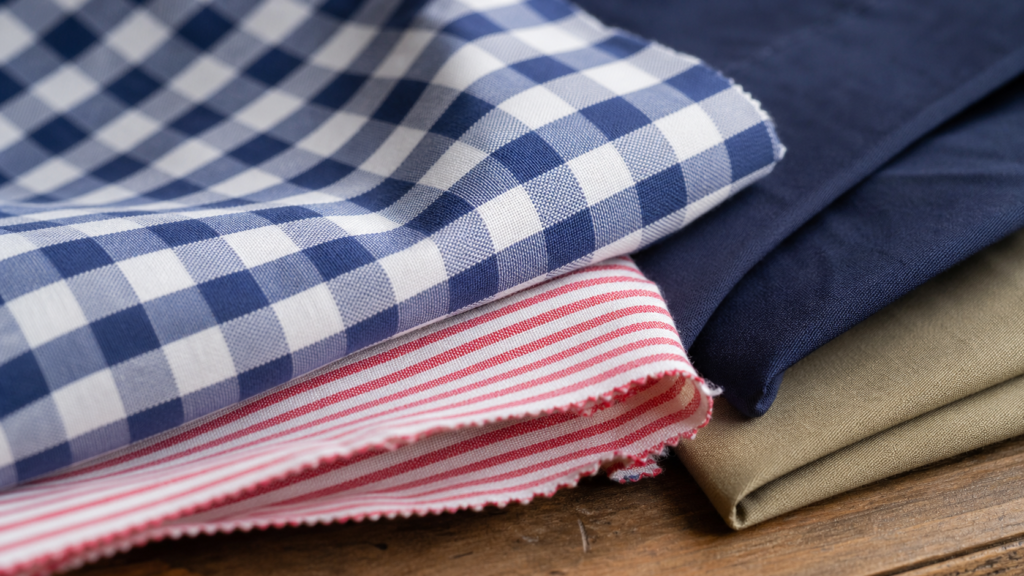
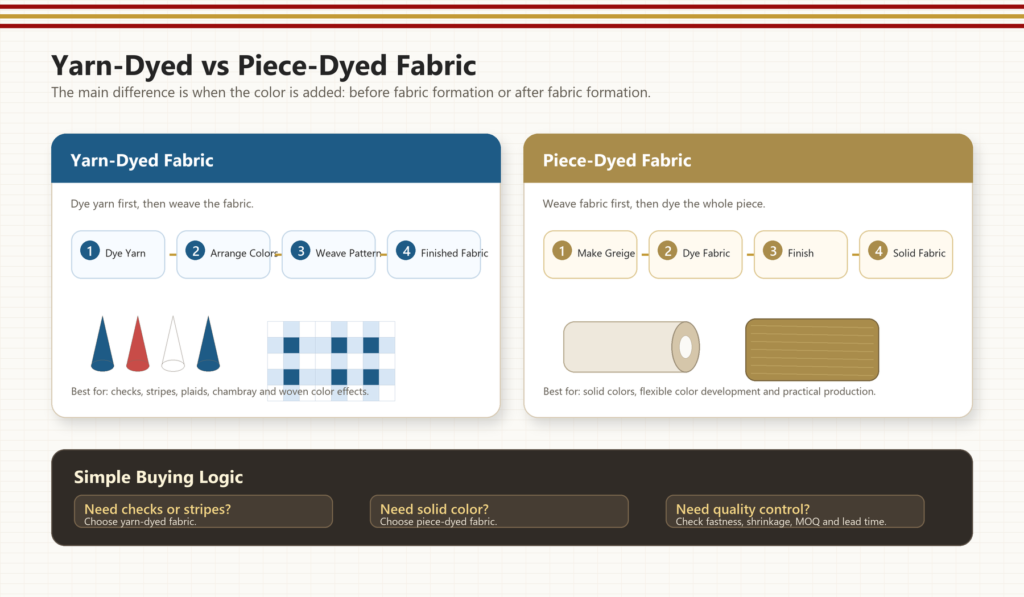
Yarn-dyed fabric is made with yarns that are dyed before weaving or knitting. Piece-dyed fabric is woven or knitted first and then dyed as a complete fabric. Yarn dyeing is commonly used for checks, stripes, plaids and other woven color effects, while piece dyeing is generally more practical for solid colors.
The right choice depends on the design, fiber content, target price, minimum order quantity (MOQ), lead time and performance requirements of the finished product.
What Is Yarn-Dyed Fabric?
In yarn-dyed fabric, the yarn is dyed before the fabric is formed. For woven fabric, differently colored warp and weft yarns can be arranged during weaving to create the final pattern.
Yarn-dyed construction is commonly used for:
- Stripes, checks, plaids and gingham
- Chambray and cross-color effects
- Oxford shirting
- Yarn-dyed cotton and linen blends
- Selected denim-like and decorative woven effects
The pattern is formed by the yarn arrangement rather than being printed onto the fabric surface. This often gives the fabric a more dimensional, woven appearance. A blue-and-white striped shirting fabric, for example, may use blue and white yarns in a planned sequence to create the stripe.
What Is Piece-Dyed Fabric?
Piece-dyed fabric is woven or knitted in its greige state first and then dyed as a complete fabric. This method is widely used when a consistent solid shade is required.
Common applications include:
- Cotton poplin, twill, canvas and drill
- Plain-weave fabrics
- Jersey and other knitted fabrics
- Chino and uniform fabrics
- Linings
- Solid-color fabrics for garments, bags and home textiles
For example, khaki twill for chino trousers and black cotton canvas for bags are often piece dyed. When suitable greige fabric is available, the supplier can develop the requested color after the base fabric has been produced.
Yarn-Dyed vs Piece-Dyed Fabric: Key Differences
| Factor | Yarn-Dyed Fabric | Piece-Dyed Fabric |
|---|---|---|
| When color is added | Before weaving or knitting | After the fabric is formed |
| Best suited to | Checks, stripes, plaids and woven color effects | Solid and uniform colors |
| Appearance | Often richer and more dimensional | Usually cleaner and more uniform |
| Color development | Each yarn color must be planned before weaving | A prepared greige fabric can be dyed to the target shade |
| Production complexity | Usually higher, especially for multicolor designs | Usually simpler for solid-color programs |
| MOQ | May be higher and depend on each yarn color or colorway | Can be more flexible when greige fabric is available |
| Lead time | Often longer because yarn colors must be approved before weaving | Can be shorter when the base fabric is in stock |
| Important controls | Yarn shade, pattern repeat, weaving arrangement and pattern matching | Lab dip, bulk shade, shrinkage and finishing consistency |
These are general differences rather than fixed rules. Actual MOQ, cost and lead time depend on the fiber, construction, color, finishing process and production capacity.
Appearance and Design
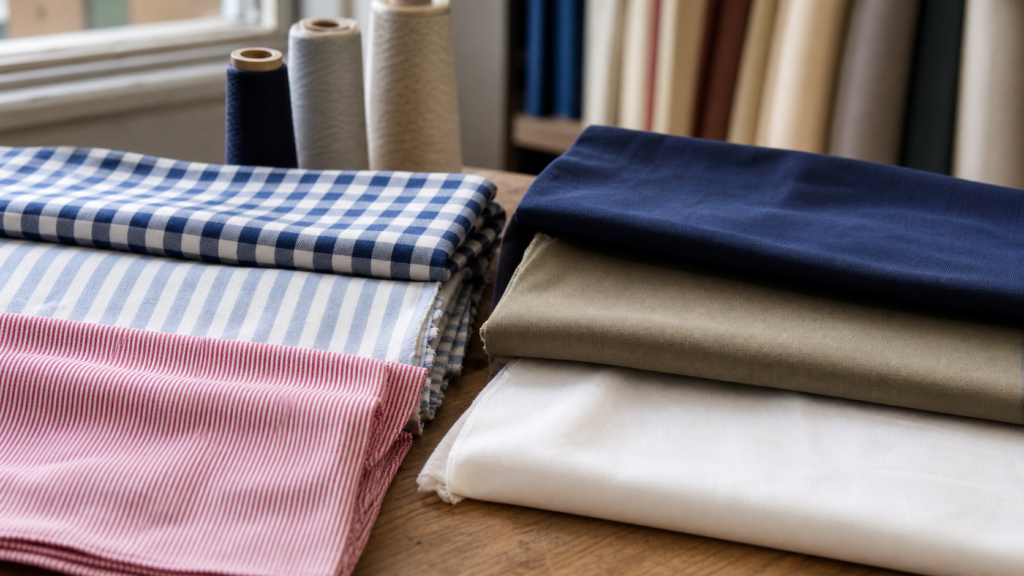
Yarn-dyed fabric is usually the better choice when color is part of the woven structure. Interweaving colored warp and weft yarns can create clean checks and stripes as well as chambray, mélange and cross-color effects.
Piece-dyed fabric is generally better suited to uniform solid shades. Because the entire fabric is dyed after construction, it is practical for products that do not require yarn-level color placement.
In simple terms:
- Choose yarn-dyed fabric for woven patterns and multicolor effects.
- Choose piece-dyed fabric for solid colors and flexible shade development.
Cost, MOQ and Lead Time
Yarn-dyed fabric normally requires more planning. Each yarn color may need to be developed, tested and approved before weaving begins. Multicolor patterns also require careful control of the yarn arrangement and pattern repeat.
Factors that can affect yarn-dyed orders include:
- Number of yarn colors
- Lab dip or yarn-dip approval
- Pattern repeat and direction
- MOQ per colorway
- Weaving setup
- Pattern matching requirements
- Bulk shade consistency
Piece dyeing can be more flexible for solid colors, particularly when the supplier has suitable greige fabric available. However, it still requires careful control of lab dips, bulk shade, shrinkage, color fastness and finishing.
A simpler process does not eliminate the need for quality control.
Which Method Has Better Color Fastness?
Neither method is automatically better. Color fastness depends on the fiber content, dye class, dyeing process, shade depth, washing and finishing conditions, and the required testing standard.
Buyers should specify the tests relevant to the final product, such as:
- Color fastness to washing
- Dry and wet rubbing fastness
- Perspiration fastness
- Light fastness
- Color migration risk
- Dimensional stability after washing
Dark and saturated shades may require additional attention with either method.
Typical Applications
Yarn-Dyed Fabric
Yarn-dyed fabric is widely used for check and stripe shirts, plaid dresses, gingham garments, Oxford shirts, casual jackets, linen-blend shirts, tablecloths, napkins, bedding and other decorative woven products.
Piece-Dyed Fabric
Piece-dyed fabric is commonly used for chino trousers, solid shirts, workwear, uniforms, jackets, dresses, aprons, tote bags, canvas bags, linings and solid-color home textile products.
What Buyers Should Confirm Before Ordering
For yarn-dyed fabric, confirm:
- Fiber composition and construction
- Yarn color standards
- Number of colors in the design
- Stripe, check or plaid repeat size
- Pattern direction
- Finished width and weight
- MOQ per colorway
- Bulk shade tolerance
- Shrinkage and color-fastness requirements
- Pattern matching requirements for garment cutting
For piece-dyed fabric, confirm:
- Base fabric specification and quality
- Greige fabric availability
- Target color standard
- Lab dip approval process
- Finished width and weight
- Bulk shade tolerance
- Shrinkage after dyeing and finishing
- Color-fastness requirements
- Required hand feel or finish
- Whether garment washing will be used
For both methods, tell the supplier how the fabric will be used. A shirt, uniform, bag and home textile product may require different performance standards.
Common Misunderstandings
“Yarn-dyed fabric is always higher quality.”
Not necessarily. Yarn-dyed fabric can have a premium appearance, but its quality still depends on the yarn, dyeing, weaving, finishing and testing.
“Piece-dyed fabric is always basic.”
Piece-dyed fabric can also be high quality. The result depends on the base fabric, dyeing control and finishing process.
“Printed stripes and yarn-dyed stripes are the same.”
They are different. Printed stripes are applied to the fabric surface after the fabric has been made. Yarn-dyed stripes are created by weaving colored yarns in a planned arrangement. Their appearance, hand feel and performance can therefore differ.
How to Choose
Choose yarn-dyed fabric when the product requires checks, stripes, plaids or a woven multicolor effect. Choose piece-dyed fabric when the priority is a consistent solid color, flexible shade development or the use of an available greige base.
Before making a final decision, compare the design requirement, fabric construction, target price, MOQ, lead time and testing standard. The most useful question is not only “What color is the fabric?” but also “When and how is the color added?”
Frequently Asked Questions
What is the main difference between yarn-dyed and piece-dyed fabric?
Yarn-dyed fabric uses yarn that is colored before weaving or knitting. Piece-dyed fabric is dyed after the fabric has been formed.
Which method is better for checks and stripes?
Yarn dyeing is usually the better choice because checks, stripes and plaids can be formed directly through the arrangement of colored yarns.
Which method is better for solid colors?
Piece dyeing is generally more practical for solid colors, especially when a suitable greige fabric is available for shade development.
Is yarn-dyed fabric more expensive?
It can be, particularly when the design uses several yarn colors or requires a complex repeat. The actual cost depends on the fiber, construction, number of colors, MOQ and finishing requirements.
Can both methods achieve good color fastness?
Yes. Both can achieve good color fastness when the correct dyes, processes and quality controls are used. Buyers should specify the required test methods and acceptance standards.
Fabric Development Support
Xingshun Textile supports the development of yarn-dyed checks, stripes and plaids as well as solid piece-dyed woven fabrics. Recommendations can be based on your required composition, weight, width, color standard, quantity, testing requirements and final product use.
To discuss a fabric program, send us your target specification or reference sample. We can review the construction, dyeing method, MOQ and production requirements before sampling.
About Xingshun Textile
Xingshun Textile is a fabric supplier and manufacturer specializing in woven and functional fabrics, including organic cotton, organic linen, hemp, cotton, twill, canvas, yarn-dyed fabric, denim, corduroy, T/C, nylon and polyester fabrics.
We support custom weaving, dyeing, printing, coating, finishing and fabric development according to the buyer’s composition, weight, width, hand feel, color standard and end-use requirements.