Quick Answer
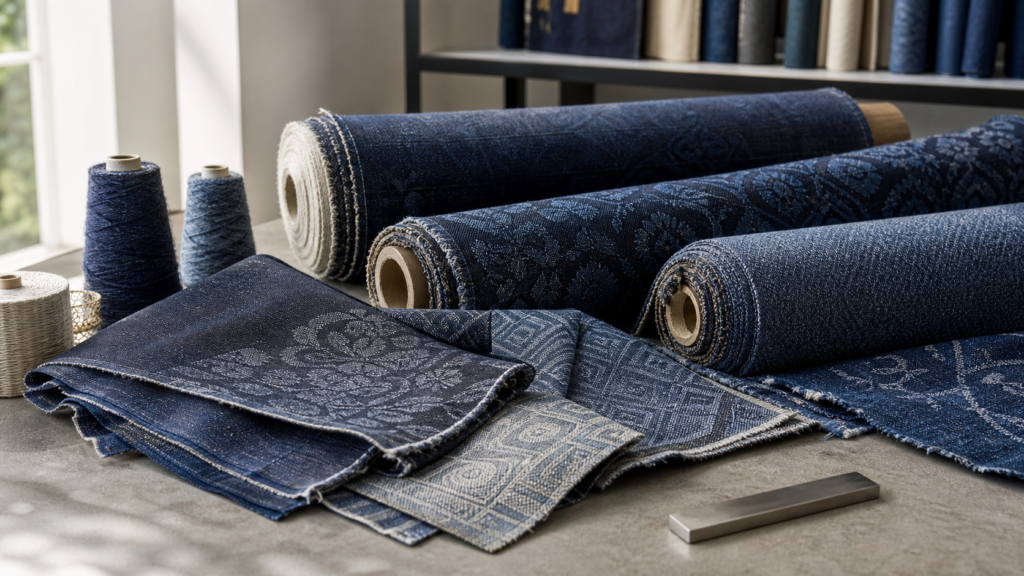
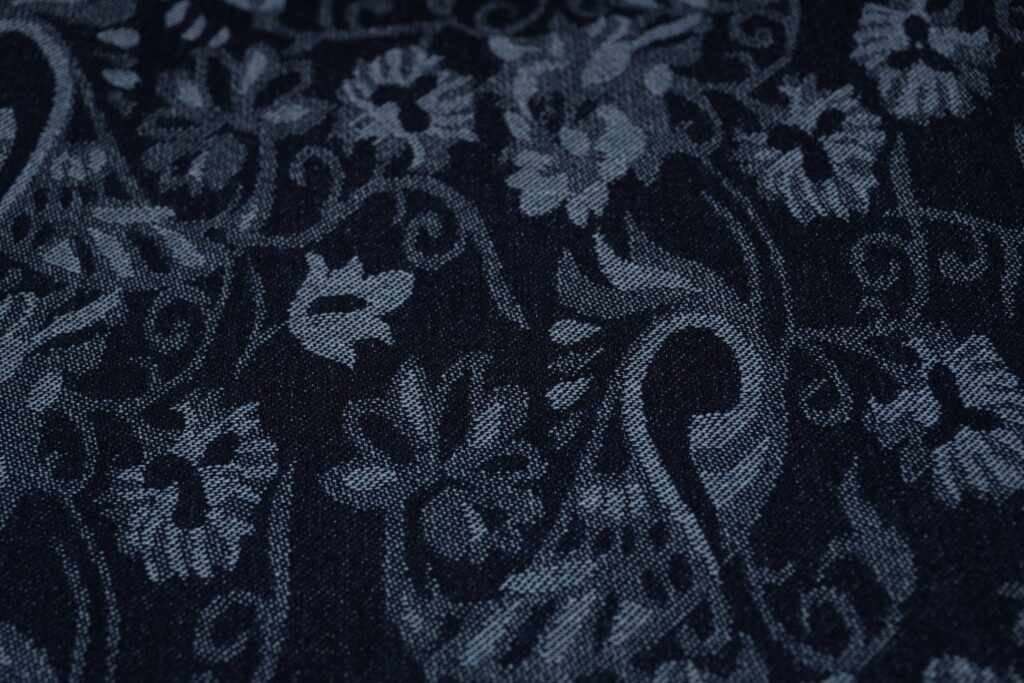
Jacquard denim fabric is denim with a woven pattern. The pattern does not sit only on the surface like printing. Instead, the loom controls the yarn movement and creates the design during weaving.
Therefore, jacquard denim can show floral patterns, geometric motifs, tonal effects or vintage-style textures while still keeping a denim base.
For buyers, the key point is simple. Jacquard denim is not only about appearance. Pattern repeat, yarn color, fabric weight, shrinkage, washing effect, rubbing fastness, MOQ and lead time all matter before bulk production.
1. What Is Jacquard Denim Fabric?
Jacquard denim fabric combines denim structure with jacquard weaving.
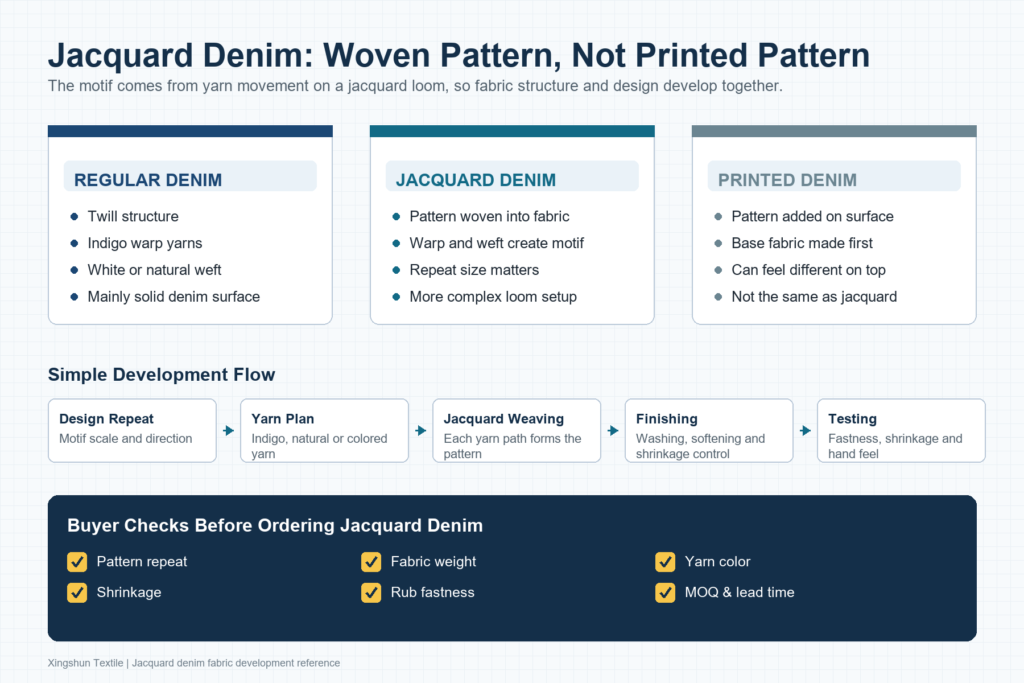
Regular denim usually uses a twill structure. It often has indigo warp yarns and white or natural weft yarns. This creates the classic blue denim look.
Jacquard denim adds more design control.
A jacquard loom can lift and control yarns in a more complex way. As a result, the fabric can create woven patterns during production.
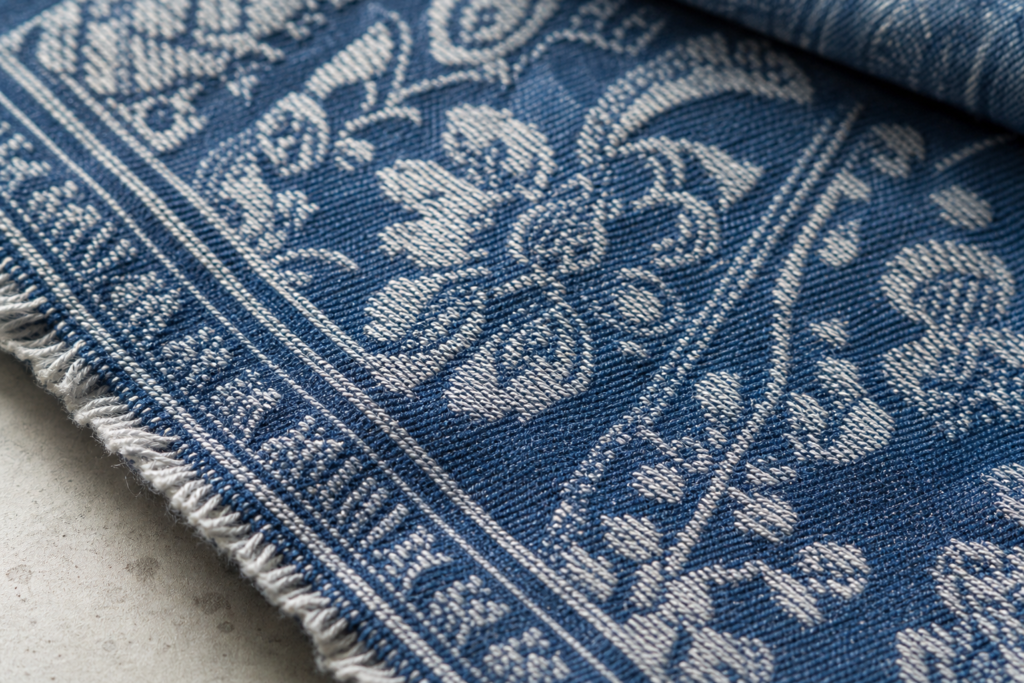
These patterns may look bold or very subtle. Some jacquard denim fabrics show clear floral or geometric designs. Others show tone-on-tone patterns that only appear under certain light.
In simple words, jacquard denim creates the design through weaving, not only through printing.
2. Jacquard Denim vs Printed Denim
This difference matters a lot for buyers.
Printed denim starts with a denim base fabric. Then the mill adds a design to the surface through printing.
Jacquard denim forms the design inside the fabric structure. The warp and weft yarns create the pattern while the fabric is woven.
Therefore, the two fabrics can look, feel and perform differently.
Printed denim may give more color freedom. It can also work well for graphic designs and lower-complexity development.
However, jacquard denim often gives a richer woven texture. The design feels more integrated with the fabric because the yarns create the pattern.
That does not mean jacquard denim is always better. Instead, it means the fabric serves a different purpose.
3. Why Do Buyers Choose Jacquard Denim?
Buyers often choose jacquard denim when they want denim with stronger visual identity.
Regular denim can look clean, classic and commercial. However, jacquard denim can make the fabric more distinctive.
It works well when the design needs:
- Woven floral patterns
- Geometric denim motifs
- Tone-on-tone denim effects
- Vintage-style woven texture
- Decorative panels
- Brand-specific pattern development
- Premium denim appearance
Also, jacquard denim can make a product stand out without adding heavy printing or embroidery.
For example, a denim jacket may use jacquard denim on the body or panels. A tote bag may use jacquard denim to create a more decorative surface. A fashion skirt or overshirt may use tonal jacquard for a subtle premium look.
4. What Changes in Production?
Jacquard denim usually needs more planning than regular denim.
First, the buyer needs a clear pattern direction. The design repeat must match the final product. If the repeat is too large, cutting may waste fabric. If the repeat is too small, the design may lose impact.
Next, the yarn plan matters. The mill may use indigo yarn, natural yarn, colored yarn or different yarn counts to create contrast.
Then, the loom setup takes time. Jacquard weaving needs more technical preparation than basic denim weaving.
Finally, finishing can change the final appearance. Washing, enzyme treatment, softening, brushing or garment washing can make the pattern more visible or more muted.
Because of this, buyers should check both greige fabric and finished fabric when possible.
5. What Should Buyers Be Careful About?
Jacquard denim can look beautiful, but it also brings practical risks.
First, pattern repeat affects cutting. Buyers should confirm the repeat size before production.
Second, fabric weight affects the product. A heavy jacquard denim may work for jackets or bags, but it may feel too stiff for shirts or dresses.
Third, yarn floats may affect durability. Some jacquard designs use longer yarn floats. These can create texture, but they may also snag more easily.
Also, shrinkage and skew need attention. Denim can change after washing, and jacquard patterns may make distortion more visible.
Finally, rubbing fastness matters. Indigo and dark denim shades can transfer color. Therefore, buyers should check dry rub and wet rub results, especially for dark shades and washed styles.
6. Common Uses of Jacquard Denim
Jacquard denim works across many product categories.
Common apparel uses include:
- Denim jackets
- Jeans panels
- Overshirts
- Skirts
- Dresses
- Vests
- Casual pants
- Fashion tops
Common accessory uses include:
- Tote bags
- Backpacks
- Caps
- Shoes
- Decorative trims
- Patchwork panels
Common home and lifestyle uses include:
- Cushion covers
- Upholstery-style fabric
- Table runners
- Decorative textile items
However, each product needs a different fabric target. A jacket may need stronger body. A shirt may need softer drape. A bag may need better abrasion performance.
Therefore, buyers should match jacquard denim to the final product, not only to the pattern.
7. What Should Buyers Confirm Before Ordering?
Before ordering jacquard denim fabric, buyers should confirm:
- Fabric composition
- Fabric weight and width
- Yarn color and yarn count
- Pattern repeat size
- Pattern direction
- Jacquard design artwork
- MOQ and lead time
- Hand feel after finishing
- Shrinkage after washing
- Skew and twisting risk
- Dry rub and wet rub color fastness
- Washing or garment wash requirement
- Whether the fabric has long floats
- Final product use
In short, do not ask only:
Can you make this denim pattern?
Instead, ask:
Can this jacquard denim pattern work for my product, washing method, target price and bulk production requirement?
FAQ
Is jacquard denim the same as printed denim?
No. Jacquard denim creates the pattern during weaving. Printed denim adds the pattern to the fabric surface after weaving.
Is jacquard denim more expensive than regular denim?
Often, yes. Jacquard denim usually needs more design preparation, loom setup and production control. However, the final cost depends on yarn, weight, repeat size, MOQ and finishing.
Can jacquard denim be washed like regular denim?
It can use denim washing processes, but buyers should test the fabric first. Washing can change pattern contrast, hand feel, shrinkage and color fastness.
What products are best for jacquard denim?
Jacquard denim works well for jackets, overshirts, skirts, bags, caps, decorative panels and premium casualwear. Still, the best use depends on weight, hand feel and durability.
Final Thought
Jacquard denim gives denim a more decorative and structured design language.
However, it is not just a pattern choice.
It connects yarn, weaving, design repeat, washing, shrinkage and final product performance.
For buyers, the best approach is to review both the appearance and the technical details before bulk production.
That is how jacquard denim becomes not only attractive, but also workable.
About Xingshun Textile
Xingshun Textile is a fabric supplier and manufacturer focusing on woven and functional fabrics, including organic cotton fabric, organic linen fabric, hemp fabric, cotton fabric, twill fabric, canvas, yarn-dyed fabric, denim, jacquard denim, corduroy, T/C fabric, nylon fabric and polyester fabric.
We support custom weaving, dyeing, printing, coating, finishing and fabric development based on buyers’ composition, weight, width, hand feel, color standard and end-use requirements.
For denim fabric, jacquard denim fabric or custom woven fabric sourcing, contact Xingshun Textile if needed.