Quick Answer
Manufacturers apply a wax-based finish to fabric to improve surface water resistance, add structure and create a rugged, aged look. However, waxed fabric is water-resistant rather than fully waterproof.
When people talk about fabric performance, they often focus on fiber content, yarn count, weave structure, weight, and hand feel.
However, one of the most important changes may happen after weaving.
Waxing is one of those finishing processes.
Waxed fabric has a distinctive character. It can look rugged and feel slightly firm. It also shows natural creases, resists light rain and develops an aged appearance over time. For these reasons, brands often use waxed cotton and waxed canvas for jackets, bags, hats, aprons, workwear and outdoor accessories.
Even so, buyers can easily misunderstand waxed fabric.
Waxed fabric is not simply “waterproof fabric.” Moreover, it differs from both PU coating and DWR finishing. The finish also does not suit every product.
To choose waxed fabric correctly, buyers need to understand what wax finishing does, what it cannot do, and what should be confirmed before production.
What Is Waxed Fabric?
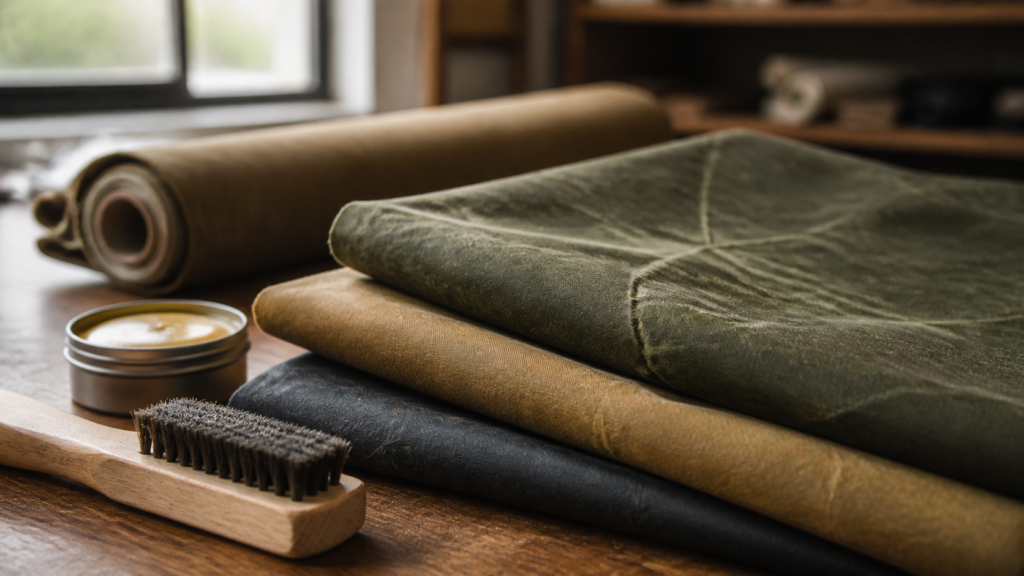
Manufacturers make waxed fabric by applying a wax-based finish to a base cloth.
Finishers often start with cotton canvas, cotton twill, cotton duck, cotton poplin or polyester-cotton fabric. They apply wax to improve water repellency, add structure and create a distinctive surface.
For example, a finishing mill may use paraffin, beeswax, synthetic wax, microcrystalline wax or a blended formula.
The result depends on the base fabric, wax type, wax amount, application method, temperature, curing process, and final finishing.
As a result, two fabrics called “waxed canvas” may look and feel very different.
Why Is Fabric Waxed?
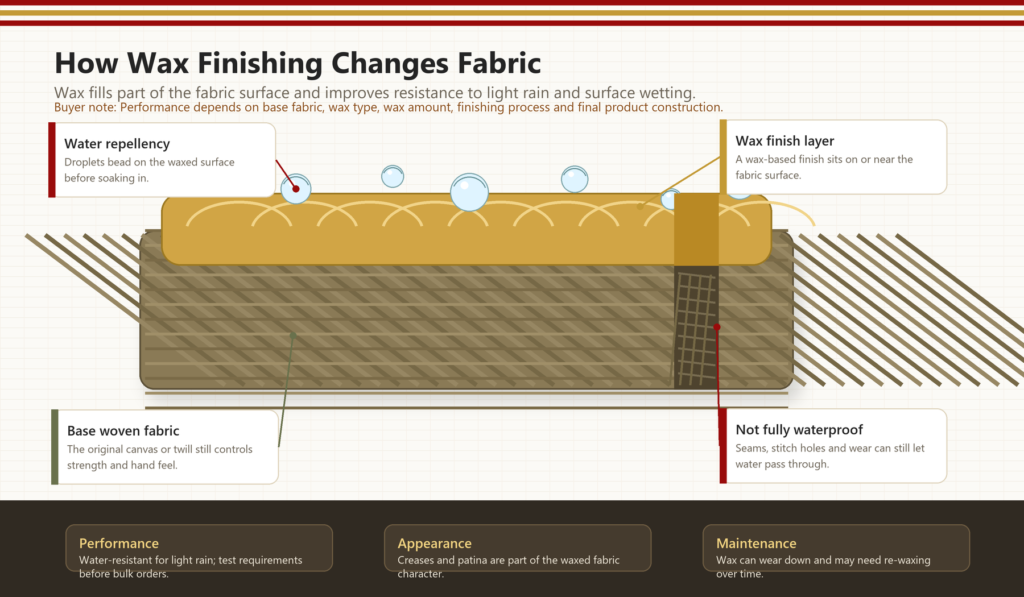
The main reason is to improve resistance to surface wetting.
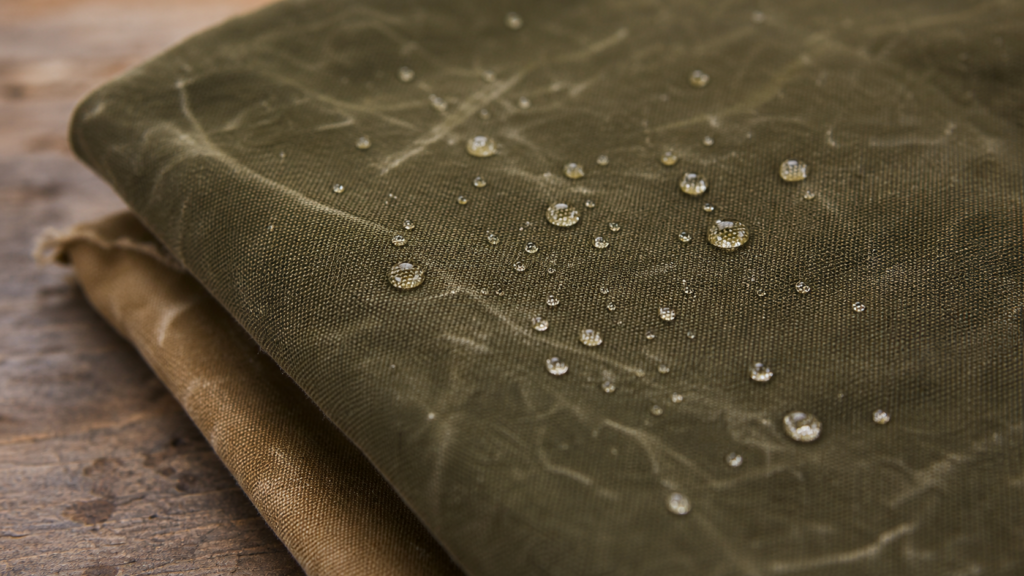
Wax helps water bead on the surface instead of soaking in at once. Therefore, the fabric can work well in light rain and in products such as bags, covers, jackets and workwear.
In addition, waxing adds body and structure. Waxed canvas often feels firmer than the same cloth before finishing.
Another reason is appearance.
Waxed fabric has a natural, lived-in look. As it bends and rubs, the surface may show creases, marks and shade variation. Many brands value this effect because the material gains character with use.
This aging effect is one of the biggest differences between waxed fabric and many modern synthetic coatings.
Is Waxed Fabric Waterproof?
In most cases, buyers should describe waxed fabric as water-resistant, not fully waterproof.
Wax can resist light rain and slow water absorption. Nevertheless, it cannot make every garment or bag fully waterproof.
There are several reasons.
First, fabric construction matters. Dense canvas performs differently from a loose weave.
Second, friction can wear down the wax layer. Areas that bend or rub often may lose water resistance sooner.
Third, water can still enter through seams, stitch holes and zippers.
Therefore, a waxed jacket may handle light rain well, but it cannot match a technical shell with a membrane and taped seams.
For buyers, the better question is not:
Is this waxed fabric waterproof?
The better question is:
What level of water resistance is needed for the final product?
Waxed Fabric vs PU Coating
Wax finishing and PU coating both improve fabric performance. However, they work in different ways.
PU coating forms a polyurethane layer on the face or back of the fabric. Depending on its thickness and test results, this layer can provide stronger water resistance. It also creates a smoother, more technical surface.
Wax finishing gives a more natural, heritage-style surface. It improves water repellency and gives the fabric a rugged appearance, but it usually does not provide the same type of continuous barrier as a PU coating.
Manufacturers often choose PU coating for rainwear, tents, covers and technical products that need measurable barrier performance.
In contrast, buyers often choose waxed fabric for its structure, durability, water resistance and natural aging effect.
Both options can work well. Therefore, buyers should choose according to the product and its test requirements.
What Products Commonly Use Waxed Fabric?
Brands often use waxed fabric when function and appearance matter equally.
Common uses include:
- Waxed canvas bags
- Outdoor jackets
- Field jackets
- Aprons
- Hats and caps
- Workwear
- Tool bags
- Backpacks
- Heritage-style clothing
- Hunting, fishing, and outdoor accessories
- Covers and utility products
Cotton canvas is one of the most common base fabrics because it has strength, texture, and a natural appearance that works well with wax finishing.
However, weight and construction must match the product. Heavy waxed canvas may suit a bag but feel too stiff in a lightweight garment.
What Are the Advantages of Waxed Fabric?
Waxed fabric offers several practical and visual advantages:
- The finish improves resistance to light rain and surface wetting.
- Added wax gives the fabric more structure and a fuller hand feel.
- The surface creates a rugged, durable appearance.
- Natural creases help the material age with character.
- Users can often repair or rewax the fabric to refresh its water resistance.
In addition, wax gives products a strong visual identity. Many customers recognize waxed canvas by its matte surface, creases and vintage outdoor look.
What Are the Trade-Offs?
Waxed fabric also involves several trade-offs:
- It may feel stiffer than untreated fabric.
- Some formulas create a waxy hand or slight surface tack.
- Fold marks, scratches and shade changes may develop during use.
- The finish may reduce breathability.
- High heat can damage the wax during ironing, tumble drying or washing.
- Poor process control may cause wax or color transfer.
- The finished product usually needs special care instructions.
Some customers value visible marks and shade changes. Others may consider them defects. Therefore, the buyer and supplier should agree on the acceptable appearance before production.
This is why waxed fabric should be developed with the final use in mind.
What Should Buyers Confirm Before Ordering Waxed Fabric?
Before ordering waxed fabric, buyers should confirm several practical points:
- What is the base fabric composition?
- What is the fabric weight?
- What is the weave structure?
- What type of wax finish is used?
- Is the finish heavy, medium, or light?
- Is the fabric soft, firm, dry, or tacky?
- What level of water resistance is required?
- Will the fabric be used for garments, bags, or outdoor accessories?
- Is color variation acceptable?
- Are crease marks part of the intended look?
- Is there any wax transfer risk?
- What are the care instructions?
- Can the product be re-waxed after use?
- Does the fabric need abrasion, crocking, or colorfastness testing?
- Are there any compliance requirements for the target market?
Together, these questions can prevent problems later in production.
For example, a buyer may like heavily waxed canvas, while the sewing factory may find it too stiff. Likewise, the customer may expect a clean, uniform surface even though wax naturally creates creases and shade variation.
The fabric must match the product story and customer expectation.
Final Thought
Waxed fabric provides more than function. It also creates a clear design language.
Wax improves water resistance and structure. At the same time, it creates the natural aged appearance that many brands value.
However, buyers should understand the finish’s limitations.
Waxed fabric is usually water-resistant, not fully waterproof. Over time, the surface may change and develop marks. The product may also need special care.
For the right product, these traits are not disadvantages. Instead, they form part of the fabric’s identity.
That is what makes waxed fabric special.
FAQ
Is waxed fabric waterproof?
Waxed fabric usually resists light rain but does not provide full waterproofing. Seams, zippers and long water exposure still affect performance.
What products commonly use waxed fabric?
Brands often use waxed fabric for canvas bags, jackets, aprons, hats, workwear and heritage-style outdoor accessories.
What should buyers confirm for waxed fabric?
Buyers should confirm base fabric, wax type, wax amount, hand feel, water resistance, color effect, storage condition and care instructions.
Xingshun Textile can support waxed cotton fabric, waxed canvas, waxed twill and related finishing development for bags, jackets, aprons, hats and outdoor accessories.
About Xingshun Textile
Xingshun Textile is a fabric supplier and manufacturer focusing on woven and functional fabrics, including organic cotton fabric, organic linen fabric, hemp fabric, cotton fabric, twill fabric, canvas, yarn-dyed fabric, denim, corduroy, T/C fabric, nylon fabric and polyester fabric.
We support custom weaving, dyeing, printing, coating, finishing and fabric development based on buyers’ composition, weight, width, hand feel, color standard and end-use requirements.
Send Xingshun Textile your target composition, weight, width, color standard, quantity and end-use requirements to discuss sampling or bulk production.